佛法無邊渡眾生
慈光普照滿人間
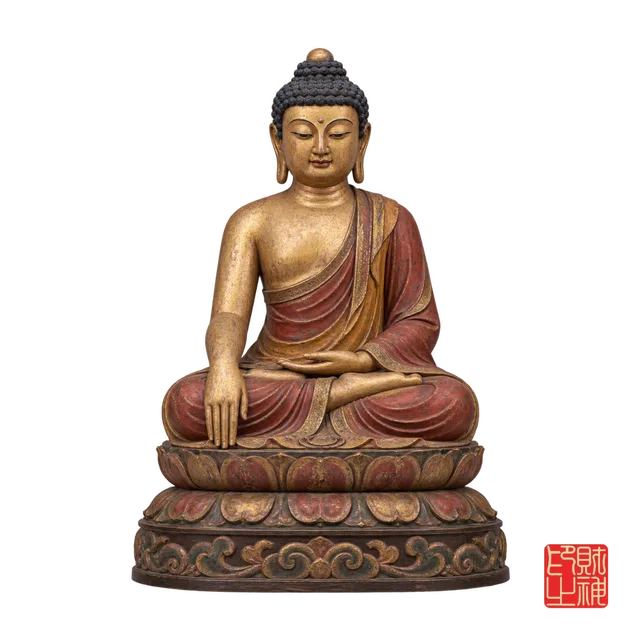
南無本師釋迦牟尼佛
南無本師釋迦牟尼佛
ná mó běn shī shì jiā móu ní fó
Homage to Sakyamuni Buddha, the teacher from whom this all comes
唸誦 · how it is recited ↓Recorded. We will write to you before the day.
An offering is a donation to the temple's upkeep. It buys nothing and promises nothing.
行儀 · three ladles
浴佛
Bathing the Buddha
Three ladles of water over a small standing figure. The sources are unusually plain about whose bath it is, and it is not his.
四月初八 · 佛誕
淨心
浴佛主要是在淨浴我們的心
The three you poured were 身, 口 and 意 — what you have done, said and thought. The figure in the basin was never the thing being washed.
佛光普照
The Buddha's light shines everywhere.
You poured three ladles over a small bronze child, and what the tradition says you washed was yourself. Nothing was requested and nothing was promised — this is the only hall here with no petition in it at all.
Houses differ · The date differs by tradition: 四月初八 in Chinese Buddhism, and Vesak on the full moon of the fourth lunar month elsewhere, which is why Singapore's public holiday and a Chinese temple's 浴佛 do not always fall together. Some houses scent the water; some pour once rather than three times.
釋迦牟尼佛
Sakyamuni · Shìjiāmóuní Fó
The Buddha
The teaching itself — not a petition, and the only hall here without one
上香 早課 · Light incense
早課 closes at 11am.
科儀
浴佛
Bathing the Buddha
When · 四月初八 — the eighth day of the fourth lunar month, 佛誕
-
Set a standing figure of the infant Buddha in a shallow basin — one hand raised to the sky, one lowered to the earth.
-
Prepare 香湯: warm water with flower petals in it. Temples steep 甘草, and add cinnamon, clove or cardamom; at home, clean water and petals is enough.
-
Light incense, put your palms together, and say the Buddha's name three times.
-
Ladle the water over the figure's SHOULDERS, twice. Not over the head, and not many times — the gesture is washing, not drenching.
-
Say what you are washing off. The tradition is explicit that the water is for you and not for him: 我今灌沐諸如來 — the figure is already clean.
-
Keep the day vegetarian. Nothing that was killed for you, and nothing that had to die at all.
其義
The story says the infant took seven steps, pointed one hand at the sky and one at the earth, and said 天上天下,唯我獨尊 — and that nine dragons came and bathed him. The rite re-enacts that bath. What makes it worth doing is the reversal in the middle of it: you are pouring water over a figure that does not need washing, and the tradition says so out loud. The defilement being rinsed is the one you brought, and the two ladles are a way of naming it with your hands rather than your mouth.
所求
Nothing is asked for. This is the one rite in the temple with no petition in it — a birthday you attend rather than a favour you request, and the only appropriate thing to bring is your attention.
參拜 · what is done at this hall
free
These are the acts performed at 釋迦牟尼佛's altar, and they are not the same as the ones at the next hall. Tap one and it is kept in your record — nothing is charged and nothing is owed.
供水
Offer a cup of clean water
- Bring
- Water. Clean, and nothing else in it.
- Do
- Fill a cup and set it on the altar. Bow, and go. Many households change it each morning; the used water is poured out somewhere clean rather than down a drain.
- What it means
- The reason water and not something better is the whole teaching in one object, and the traditional explanation is blunt about it: water costs almost nothing, so nobody has to do anything crooked to get it, and nobody walks away from the altar quietly regretting what they left there. An offering that leaves no grudging feeling behind is the only kind that was ever any use. The other half is what water is like — level, clear, and of use to everything without competing with any of it.
- And it ends
- And this is the hall where the bowing is the point rather than the asking: what is put down at a Buddha's altar is the wish to be thought well of, not a request for terms. On a site about money that is worth stating rather than implying — nothing here is for petitioning a Buddha about your income, and there is no version of this act that does that.
釋迦牟尼 is not a name. It is a title: the sage (牟尼) of the Shakya (釋迦) clan. The man was Siddhartha Gautama, born at Lumbini in what is now Nepal into a ruling family, and the whole story turns on his leaving it — the wealth, the position, the household — because none of it answered the question he had.
He is addressed here as 本師, the original teacher, which is what the recitation at this altar says: 南無本師釋迦牟尼佛. Not lord, not king, not emperor of anything. Teacher.
The figure sits in 禪定印, the meditation seal — the hands open in the lap, right over left, thumbs touching. It is the most ordinary posture in Buddhist art and it is doing something specific: nothing. No weapon, no seal of office, no ingot, no gesture of granting. Every other hall in this temple shows a god equipped for the thing you came to ask about. This one shows a man sitting still.
WHAT THIS HALL IS NOT FOR. You may pray here for anything you like and nobody will stop you. But it would be dishonest of a site named for the God of Wealth not to say plainly that the Buddha is not petitioned for money, and that the tradition he founded regards wanting it as the mechanism of the trouble rather than the cure for it. If what you need is a business decision, 財神 is in the main hall and 關帝 is beside him, and both of them are the right address. Come here for the other thing.
Feast days
佛誕 · 浴佛節 — three ladles of water over the infant figure. The washing is of your own mind; the sources say so plainly.
唸誦
南無本師釋迦牟尼佛
Homage to the Original Teacher, Sakyamuni Buddha
南無本師釋迦牟尼佛
ná mó běn shī shì jiā móu ní fó
Homage to Sakyamuni Buddha, the teacher from whom this all comes
- 遍數 · How many
- Three times, palms together
- 何時 · When
- On entering the hall, and before 浴佛 at 佛誕
供品 · What to bring
- Flowers, and fresh ones — the whole iconography of this hall is a birth among flowers
- Fruit, uncut and in odd numbers
- Clean water. A cup of it is a complete offering here and is the oldest one
- Vegetarian food if you bring food at all — 金針, 豆皮, 香菇, 花生 and the rest of the 素齋
供品禁忌 · What not to bring
What follows is widely observed and is not doctrine. These are folk conventions: they differ between Taiwan, Hokkien Singapore and Guangdong, and they have changed within living memory. They are worth knowing because the people around you at the altar will know them.
-
芭樂 · 番茄 · Guava and tomato
Both are 多籽 — many-seeded — and the seeds pass through the gut intact. Fruit that comes out the other side is treated as 不潔, unclean, to set before a god. A second reading is a pun: 多籽 for 多心, "many hearts", meaning a divided or insincere one.
-
釋迦 · Sugar apple (custard apple)
It carries the Buddha's own name — 釋迦 is 釋迦牟尼 — and its knobbed surface is read as his topknot. Offering something named and shaped after him is taken as disrespect rather than devotion.
-
香蕉、李、梨(同時) · Banana, plum and pear together
Spoken in Taiwanese, 蕉—李—梨 sounds like 「招你來」 — inviting you to come. That is what you say to 好兄弟, the wandering spirits, and not to a god. Any one of the three alone is unremarkable; it is the set of three that makes the phrase. Avoided most strictly in 七月.
-
榴槤 · Durian
The smell. Strongly odorous offerings are treated as 不潔 in the same category as anything spoiled — the objection is to what is set before the god, not to the fruit itself.
-
蓮霧 · Wax apple
Hollow at the centre, read as 無心 — heartless, or offering without a heart in it. The dimpled base is separately read as 漏財, wealth leaking away, which is why it is avoided here in particular.
-
牛肉 · Beef
The ox is 太上老君's mount. Daoist practice forbids eating it and forbids offering it, and the prohibition is about the animal's station rather than about meat in general.
李豐楙, Academia Sinica's first Daoist academician and emeritus chair professor at 政治大學 says that the taboos in ritual are 各家說法 — one school's telling. Homophones are one factor among several, the rules differ by region, and they have shifted over time. Fruit specialists interviewed alongside him rejected several outright.
We think both halves are true and a visitor deserves both. Follow them at a temple where they are observed — the people beside you will know them, and that is reason enough. Do not treat a guava as an offence against heaven.
忌 · Never bring
- Meat of any kind, and anything that required a death. This is the strictest hall on the site and it is not a preference
- Alcohol
- Spirit money. Burning paper is a Chinese folk practice and not a Buddhist one; nobody will stop you, and it is not what this altar is for
稟告
How to introduce yourself, and then ask
Before you ask for anything, you say who you are. Every account of this agrees on the same reason, and it is not politeness: a hall is a public office and the god is being told which of us is speaking.
-
1
弟子〔姓名〕/信女〔姓名〕
Your name
弟子 if you are a man, 信女 if you are a woman. Your name in full, as it is written.
-
2
現住〔住址〕
Where you live
Where you actually live now, not where you are registered. Said aloud or in your head — nobody else needs to hear it.
-
3
生於〔年〕年〔月〕月〔日〕日〔時辰〕
When you were born
Year, month, day and hour if you know it. Some add the 生肖. This is the part that identifies you and the part people skip.
-
4
今備〔供品/金紙〕,敬奉釋迦牟尼佛
What you have brought, and to whom
What is actually on the table. If you have brought nothing, say so — coming empty-handed and saying so is better than naming something that is not there.
-
5
祈求釋迦牟尼佛保佑〔所求〕
And then the asking
Plainly, and one thing at a time. What is appropriate to ask differs by hall — this page says what each one is for.
-
6
弟子〔姓名〕,叩謝
Thank, and say who is thanking
Named again at the end. You introduced yourself; you close the same way.
Say all of it again at each altar you stop at, not once on the way in. You are addressing somebody different each time, and this is the part most often left out.
This is the common Taiwanese and Singaporean form as recorded in the sources below — a shape, not a script, and not one temple's rule. Households differ on how much detail to give: some add parents' names or where the ancestral tablets are kept. If your family does it differently, your family is right and this page is a guide for somebody who has never been told.
Where your offering goes
Half of every 香油錢 left here is set aside and sent on, once a month, to a working temple.
The first remittance has not gone out yet. When it does, the temple, the date and the transfer reference will appear here.
下一步
八字
Every reading on this site is cast against a birth chart. Start with yours.