太歲當頭坐
安奉保平安
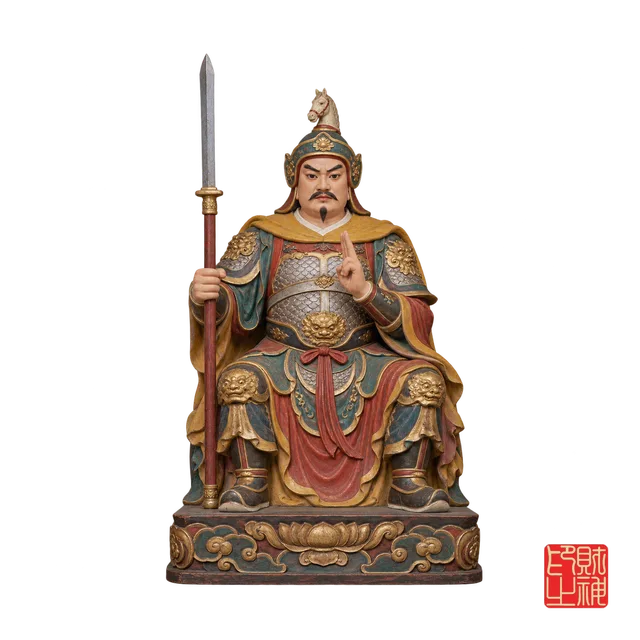
太歲寶誥
志心皈命禮 值年太歲至德尊神
zhì xīn guī mìng lǐ — zhí nián tài suì zhì dé zūn shén
With whole heart I bow — Most Virtuous God, the General on duty this year
唸誦 · how it is recited ↓Recorded. We will write to you before the day.
An offering is a donation to the temple's upkeep. It buys nothing and promises nothing.
行儀 · file it
安太歲
Registering with the Year General
A registration, in the plainest sense: name, birth date, address, filed with the general who governs this year. And a closing at the end of it that most people never come back for.
太歲殿 · 正月初一至元宵
The window
, with as the real line — the year turns there and not on 1 January.
The 九宮飛星 chart turns on the same boundary. This year's grid
Not saved, not sent. It reads like a form because at the temple it is one — your name goes onto the 太歲燈 or the 祈福榜 for the year.
The incense
金已化.
Commonly done at 送神 on 十二月廿四. Most people never come back for this half, which is why it is a step here and not a footnote.
歲德合和
The year's virtue in accord.
You found the year's general, filed your particulars with him, placed the tablet, and — the part almost nobody does — came back and closed it. Registering is the easy half.
Houses differ · Temples differ on the window (正月初一 to 元宵 is the common one), on the fee, and on whether the tablet is kept at the temple or at home. Which zodiac signs are held to 犯太歲 in a given year also differs between houses and between almanacs.
太歲星君
Tai Sui · Tài Suì Xīngjūn
The Year Deity
Annual protection in your clash year
上香 早課 · Light incense
早課 closes at 11am.
科儀
安太歲
Registering with the Year General
When · Between 正月初一 and 正月十五, before the year settles
-
Find which of the sixty generals governs this year. It is a different one each year and the name matters.
-
Write your name, birth year and address on the 太歲符.
-
Place it at the temple or high on a wall at home — never in a bedroom or a kitchen.
-
Light the year lamp and leave it lit for the year.
-
Return at year end to 謝太歲 and take the tablet down. Leaving it up is worse than never placing it.
其義
You are not fighting him and you are not appeasing him. 安 means to settle or to place — you are REGISTERING, the way one registers an address with an authority that will otherwise not know you are there. Which is why the particulars are written down and why the tablet comes down at the end: a registration that is never closed is a file left open.
所求
Name, year of birth, address. It reads like a form because it is one.
科儀
謝太歲
Closing the Year with the General
When · From 冬至 to the last day of the lunar year
-
Bring the 太歲符 placed at the start of the year down yourself.
-
Offer thanks first, before anything is asked about the year ahead.
-
Burn the tablet with the year’s gold paper.
-
Only then register for the coming year, if you intend to.
其義
The closing half of 安太歲, and the half most people skip. A registration left open is the tradition’s idea of an untidy year — the general who was asked for protection is not thanked, and the file stays with your name in it. This hall exists to make the closing as ordinary as the opening.
所求
Thanks, before anything else is said.
參拜 · what is done at this hall
free
These are the acts performed at 太歲星君's altar, and they are not the same as the ones at the next hall. Tap one and it is kept in your record — nothing is charged and nothing is owed.
拜本命元辰
Greet the general of the year you were born
- Bring
- Your birth year, in 干支. The temple's board will give it to you if you only know the western one.
- Do
- The sixty generals stand in rows — 北京白雲觀's 元辰殿 is the best known hall of them. Find the one whose 干支 is your birth year, not this year's, and pay your respects there. 正月初八 is the traditional night for it and the practice is called 順星.
- What it means
- Your 本命元辰 is fixed at birth and stays yours for life. He is not the general presiding over the current year and he is not being asked for anything the calendar decides; the visit is closer to greeting somebody who has been standing there the whole time.
- It varies
- Understand what this is NOT, because the two get run together constantly and one of them costs money. 安太歲 is a registration with THIS year's 值年太歲, made in 正月 by people whose sign clashes with him, and it is a named enrolment a temple keeps on a list. This is the other thing entirely: your own birth-year general, any day you like, nothing written down and nothing asked for. If you came to find out whether you 犯太歲 this year, that page is free too.
Tai Sui (太歲) is the celestial force linked to the planet Jupiter, personified as sixty rotating generals — one for each year of the cycle. Those whose zodiac clashes with the reigning general (犯太歲: 值/沖/刑/害/破) are thought to face an unsettled year, so since at least the Ming dynasty people 安太歲 — register with the year’s general for protection and carry a 太歲符.
正月 · early Lunar New Year — the traditional time to 安太歲 and settle your standing for the year ahead.
Feast days
安太歲 — register your name with the year’s Tai Sui general for protection; carry a 太歲符.
唸誦
太歲寶誥
The Precious Proclamation of the Year General
志心皈命禮 值年太歲至德尊神
zhì xīn guī mìng lǐ — zhí nián tài suì zhì dé zūn shén
With whole heart I bow — Most Virtuous God, the General on duty this year
- 遍數 · How many
- Once when registering, once when thanking
- 何時 · When
- Between 正月初一 and 十五, and again before the year closes
供品 · What to bring
- Your name, birth year and address, written
- A year lamp, lit and left
- Longevity noodles, uncut
供品禁忌 · What not to bring
What follows is widely observed and is not doctrine. These are folk conventions: they differ between Taiwan, Hokkien Singapore and Guangdong, and they have changed within living memory. They are worth knowing because the people around you at the altar will know them.
-
芭樂 · 番茄 · Guava and tomato
Both are 多籽 — many-seeded — and the seeds pass through the gut intact. Fruit that comes out the other side is treated as 不潔, unclean, to set before a god. A second reading is a pun: 多籽 for 多心, "many hearts", meaning a divided or insincere one.
-
釋迦 · Sugar apple (custard apple)
It carries the Buddha's own name — 釋迦 is 釋迦牟尼 — and its knobbed surface is read as his topknot. Offering something named and shaped after him is taken as disrespect rather than devotion.
-
香蕉、李、梨(同時) · Banana, plum and pear together
Spoken in Taiwanese, 蕉—李—梨 sounds like 「招你來」 — inviting you to come. That is what you say to 好兄弟, the wandering spirits, and not to a god. Any one of the three alone is unremarkable; it is the set of three that makes the phrase. Avoided most strictly in 七月.
-
榴槤 · Durian
The smell. Strongly odorous offerings are treated as 不潔 in the same category as anything spoiled — the objection is to what is set before the god, not to the fruit itself.
-
蓮霧 · Wax apple
Hollow at the centre, read as 無心 — heartless, or offering without a heart in it. The dimpled base is separately read as 漏財, wealth leaking away, which is why it is avoided here in particular.
-
牛肉 · Beef
The ox is 太上老君's mount. Daoist practice forbids eating it and forbids offering it, and the prohibition is about the animal's station rather than about meat in general.
李豐楙, Academia Sinica's first Daoist academician and emeritus chair professor at 政治大學 says that the taboos in ritual are 各家說法 — one school's telling. Homophones are one factor among several, the rules differ by region, and they have shifted over time. Fruit specialists interviewed alongside him rejected several outright.
We think both halves are true and a visitor deserves both. Follow them at a temple where they are observed — the people beside you will know them, and that is reason enough. Do not treat a guava as an offence against heaven.
忌 · Never bring
- Leaving the tablet up after the year ends. An open file is worse than none
稟告
How to introduce yourself, and then ask
Before you ask for anything, you say who you are. Every account of this agrees on the same reason, and it is not politeness: a hall is a public office and the god is being told which of us is speaking.
-
1
弟子〔姓名〕/信女〔姓名〕
Your name
弟子 if you are a man, 信女 if you are a woman. Your name in full, as it is written.
-
2
現住〔住址〕
Where you live
Where you actually live now, not where you are registered. Said aloud or in your head — nobody else needs to hear it.
-
3
生於〔年〕年〔月〕月〔日〕日〔時辰〕
When you were born
Year, month, day and hour if you know it. Some add the 生肖. This is the part that identifies you and the part people skip.
-
4
今備〔供品/金紙〕,敬奉太歲星君
What you have brought, and to whom
What is actually on the table. If you have brought nothing, say so — coming empty-handed and saying so is better than naming something that is not there.
-
5
祈求太歲星君保佑〔所求〕
And then the asking
Plainly, and one thing at a time. What is appropriate to ask differs by hall — this page says what each one is for.
-
6
弟子〔姓名〕,叩謝
Thank, and say who is thanking
Named again at the end. You introduced yourself; you close the same way.
Say all of it again at each altar you stop at, not once on the way in. You are addressing somebody different each time, and this is the part most often left out.
This is the common Taiwanese and Singaporean form as recorded in the sources below — a shape, not a script, and not one temple's rule. Households differ on how much detail to give: some add parents' names or where the ancestral tablets are kept. If your family does it differently, your family is right and this page is a guide for somebody who has never been told.
Where your offering goes
Half of every 香油錢 left here is set aside and sent on, once a month, to a working temple.
The first remittance has not gone out yet. When it does, the temple, the date and the transfer reference will appear here.
元辰殿 · the sixty
六十太歲星君
One general for each pairing of stem and branch, so the cycle takes sixty years to return. Find the one who presides over the year you were born under — and the one holding this year.
Free. Names and dates only — see the page for why there are no biographies.
下一步
犯太歲
Check whether you clash with this year’s General before you register. It takes a birth year and nothing else.