有求必應
普濟勸善
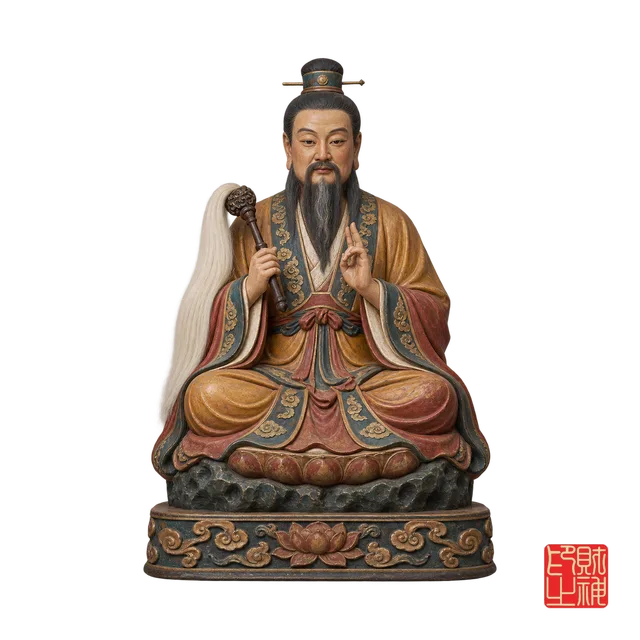
黃大仙寶誥
志心皈命禮 赤松黃大仙師
zhì xīn guī mìng lǐ — chì sōng huáng dà xiān shī
With whole heart I take refuge and bow — Great Immortal Wong of Red Pine
唸誦 · how it is recited ↓Recorded. We will write to you before the day.
An offering is a donation to the temple's upkeep. It buys nothing and promises nothing.
行儀 · ask once
求籤
Drawing a Lot
One lot, one matter — and a hundred sticks graded from three 上上 down to eighteen 下下. The temple hands you no interpretation.
嗇色園黃大仙祠 · 香港
Then, before the tube is touched: 大仙大仙,指點迷津
有求不應
His 有求必應 is held within 普濟勸善 — universal relief, and the exhortation to good. For 富貴顯達, riches and prominence, the tradition says he does not answer. You may still ask. This is what his own house says about the asking.
一支落下 — one stick.
解籤處
At 嗇色園 the reading is a separate transaction with a 解籤師傅 at the stalls. Here it is the oracle, and it reads the lot against the question you actually asked rather than printing a verse at you.
有求必應
Ask, and it is answered — within 普濟勸善, and no further.
You gave your name, held to one matter, and shook until one stick fell. What it says is read by somebody else — here, at the oracle, against the question you actually asked.
You asked ·
Houses differ · The hundred lots are graded 3 上上, 10 上吉, 32 中吉, 37 中平 and 18 下下; figures quoted elsewhere disagree with the temple's own and are worth checking. Interpretation practice differs from stall to stall, and the tradition holds 有求必應 within 普濟勸善 — for 富貴顯達 it says 有求不應.
黃大仙師
Wong Tai Sin · Huáng Dà Xiān
The Great Immortal Wong
Answered prayers · healing · business fortune
上香 早課 · Light incense
早課 closes at 11am.
科儀
求籤解籤
Drawing and Reading the Lot
When · When there is one question you actually have
-
Kneel. Say your name, your address, and the ONE question. One.
-
Shake the 籤筒 tilted forward until a single stick falls clear of the rest.
-
Cast 筊杯. A 聖杯 confirms the stick; anything else and the stick is returned and you begin again.
-
Take the confirmed number to be read. The verse is not self-explanatory and is not meant to be.
其義
有求必應 — every request answered — is his reputation, and the confirmation step is what keeps it honest. A stick that falls without a 聖杯 is not a bad answer, it is not an answer: the tradition builds in a check against reading meaning into an accident. Two sticks falling together means the same. Most people are refused at least once before they are answered.
所求
One question, phrased as a decision rather than as a wish.
參拜 · what is done at this hall
free
These are the acts performed at 黃大仙師's altar, and they are not the same as the ones at the next hall. Tap one and it is kept in your record — nothing is charged and nothing is owed.
求籤
Draw one of the hundred verses
- Bring
- One question, and only one.
- Do
- Kneel with the tube held at about forty-five degrees and shake evenly until a single stick falls. Say your name, your birth date and where you live before you ask — the address is part of it at this temple and people skip it.
- What it means
- His reputation is four characters, 有求必應, whatever is asked is answered — and the temple's own guidance is narrower than the slogan: one lot answers one matter, and asking the same question again because you disliked the first answer is understood to spoil it. If the circumstances genuinely change, people come back after a fortnight.
- It varies
- 嗇色園黃大仙祠 in Kowloon is 三教 — Daoist, Buddhist and Confucian together in one complex, and a Grade 1 historic building. The lot stalls stay open after the incense is put out in the afternoon.
解籤
Have the verse read
- Bring
- The number. That is all a reader needs.
- Do
- At the temple itself, drawing is free and a simple reading comes with it; beyond that there is an arcade of well over a hundred stalls outside, and a reading there runs roughly HK$40–100.
- What it means
- Saying the figure is the useful part. The verse is old, public and free; what is being sold is somebody's time and judgement applied to it, which is a fair thing to sell and a different thing from the text.
- And it ends
- On this site both halves are free. The whole 黃大仙 corpus is kept here with its grades and its readings, and nothing is held back behind a number — which is a decision rather than an oversight, and it is why this hall is worth describing honestly rather than advertising.
黃大仙祠攻略:求籤、財神、月老三大特色 — 卡蘿旅遊生活札記 · 黃大仙參訪攻略:求籤步驟、參拜路線、參拜禁忌 — Trip.com
Wong Tai Sin was Huang Chuping (黃初平, b. ~328 AD), a shepherd boy of Jinhua in Zhejiang who cultivated the Tao on Red Pine Mountain (赤松山) and took the name 赤松子. Legend tells that he turned scattered stones back into a flock of sheep (叱石成羊). He compounded medicines against plague and gave them away, living by the motto 普濟勸善 — “heal the world, exhort the good.” His Hong Kong temple, 嗇色園黃大仙祠, was established in 1921 and is among the most visited in the world; the arcade of interpreters below the main hall is as much a part of the place as the altar.
An interactive devotional oracle, for guidance and reflection. The hundred verses are the classical text; the English renderings and readings are ours.
Feast days
黃大仙誕 — his feast day; the Kowloon temple fills from before dawn.
New Year first-incense — devotees queue through the night to offer the year’s first stick.
唸誦
黃大仙寶誥
The Precious Proclamation of Wong Tai Sin
志心皈命禮 赤松黃大仙師
zhì xīn guī mìng lǐ — chì sōng huáng dà xiān shī
With whole heart I take refuge and bow — Great Immortal Wong of Red Pine
- 遍數 · How many
- Once, kneeling, before drawing a lot
- 何時 · When
- Before 求籤, never after — the recitation is what opens the question
供品 · What to bring
- Roast pork or chicken — he takes meat
- Oranges, and a bundle of joss sticks in an odd number
- Your question, decided before you arrive
供品禁忌 · What not to bring
What follows is widely observed and is not doctrine. These are folk conventions: they differ between Taiwan, Hokkien Singapore and Guangdong, and they have changed within living memory. They are worth knowing because the people around you at the altar will know them.
-
芭樂 · 番茄 · Guava and tomato
Both are 多籽 — many-seeded — and the seeds pass through the gut intact. Fruit that comes out the other side is treated as 不潔, unclean, to set before a god. A second reading is a pun: 多籽 for 多心, "many hearts", meaning a divided or insincere one.
-
釋迦 · Sugar apple (custard apple)
It carries the Buddha's own name — 釋迦 is 釋迦牟尼 — and its knobbed surface is read as his topknot. Offering something named and shaped after him is taken as disrespect rather than devotion.
-
香蕉、李、梨(同時) · Banana, plum and pear together
Spoken in Taiwanese, 蕉—李—梨 sounds like 「招你來」 — inviting you to come. That is what you say to 好兄弟, the wandering spirits, and not to a god. Any one of the three alone is unremarkable; it is the set of three that makes the phrase. Avoided most strictly in 七月.
-
榴槤 · Durian
The smell. Strongly odorous offerings are treated as 不潔 in the same category as anything spoiled — the objection is to what is set before the god, not to the fruit itself.
-
蓮霧 · Wax apple
Hollow at the centre, read as 無心 — heartless, or offering without a heart in it. The dimpled base is separately read as 漏財, wealth leaking away, which is why it is avoided here in particular.
-
牛肉 · Beef
The ox is 太上老君's mount. Daoist practice forbids eating it and forbids offering it, and the prohibition is about the animal's station rather than about meat in general.
李豐楙, Academia Sinica's first Daoist academician and emeritus chair professor at 政治大學 says that the taboos in ritual are 各家說法 — one school's telling. Homophones are one factor among several, the rules differ by region, and they have shifted over time. Fruit specialists interviewed alongside him rejected several outright.
We think both halves are true and a visitor deserves both. Follow them at a temple where they are observed — the people beside you will know them, and that is reason enough. Do not treat a guava as an offence against heaven.
忌 · Never bring
- Bringing more than one question. The lot answers one
稟告
How to introduce yourself, and then ask
Before you ask for anything, you say who you are. Every account of this agrees on the same reason, and it is not politeness: a hall is a public office and the god is being told which of us is speaking.
-
1
弟子〔姓名〕/信女〔姓名〕
Your name
弟子 if you are a man, 信女 if you are a woman. Your name in full, as it is written.
-
2
現住〔住址〕
Where you live
Where you actually live now, not where you are registered. Said aloud or in your head — nobody else needs to hear it.
-
3
生於〔年〕年〔月〕月〔日〕日〔時辰〕
When you were born
Year, month, day and hour if you know it. Some add the 生肖. This is the part that identifies you and the part people skip.
-
4
今備〔供品/金紙〕,敬奉黃大仙師
What you have brought, and to whom
What is actually on the table. If you have brought nothing, say so — coming empty-handed and saying so is better than naming something that is not there.
-
5
祈求黃大仙師保佑〔所求〕
And then the asking
Plainly, and one thing at a time. What is appropriate to ask differs by hall — this page says what each one is for.
-
6
弟子〔姓名〕,叩謝
Thank, and say who is thanking
Named again at the end. You introduced yourself; you close the same way.
Say all of it again at each altar you stop at, not once on the way in. You are addressing somebody different each time, and this is the part most often left out.
This is the common Taiwanese and Singaporean form as recorded in the sources below — a shape, not a script, and not one temple's rule. Households differ on how much detail to give: some add parents' names or where the ancestral tablets are kept. If your family does it differently, your family is right and this page is a guide for somebody who has never been told.
Where your offering goes
Half of every 香油錢 left here is set aside and sent on, once a month, to a working temple.
The first remittance has not gone out yet. When it does, the temple, the date and the transfer reference will appear here.
下一步
八字
Every reading on this site is cast against a birth chart. Start with yours.