妙手回春濟世
仁心保生救人
保生大帝聖號
南無慈濟保生大帝
ná mó cí jì bǎo shēng dà dì
Homage to the Compassionate Deliverer, Great Emperor Preserving Life
唸誦 · how it is recited ↓Recorded. We will write to you before the day.
An offering is a donation to the temple's upkeep. It buys nothing and promises nothing.
行儀 · ask him
求藥籤
Asking for a Medicine Lot
Name, lunar birthday, address, and what is wrong. Then you ask whether you may ask at all — and three blocks have to agree.
大龍峒保安宮
Not saved, not sent, not read by anybody here. It stays in this browser. Saying it plainly is most of what this hall is for.
Three, and they must be consecutive — a refusal starts them again. That is what "three 聖筊" means at an altar.
沒有藥方 · There is no formula here
Not behind a payment, not shown with a warning, not anywhere on this site. A 藥籤 is a prescription, and at the temple it goes to a 中藥行 who reads it against the person holding it. A website is not that person and cannot become one by adding a disclaimer.
If something is wrong, see a doctor. That sentence is the most useful thing this page contains.
妙手回春
Skilled hands bring the spring back.
You named the illness, asked whether you could ask, and confirmed it three times. The counter is where the temple hands you over to somebody who can look at you, and that is where this page hands you over too. If something is wrong, see a doctor.
Houses differ · Not every 保生大帝 temple issues 藥籤 today, and those that do differ on which categories they keep — 大人科, 小兒科, 眼科 and 外科 are the usual divisions. Practice around them has changed considerably within living memory. Ask at the temple.
保生大帝
Bao Sheng · Bǎoshēng Dàdì
The Great Emperor of Healing
Health, healing & protection from illness
上香 早課 · Light incense
早課 closes at 11am.
科儀
求藥籤
Drawing the Medicine Lot
When · Before or alongside treatment — never instead of it
-
Say who the patient is. This rite is very often performed for somebody else.
-
Draw the lot and confirm it with 筊杯, as with any lot.
-
Take the number to be read, and take what is said as counsel about conduct — rest, food, worry, temper.
-
Return to give thanks when the person recovers. That half is rarely skipped and is the reason temples kept records.
其義
吳夲 was a physician who treated the poor without charge and was deified for it, and his temples ran real dispensaries for centuries — the 藥籤 numbers once corresponded to prescriptions kept behind the counter. That history is why this hall is different from the others: it was a clinic before it was a shrine.
所求
The patient, named. Not the illness.
This is a devotional practice and not a medical one. Nothing drawn here is a diagnosis, a prescription or a reason to delay seeing a doctor. The temples that kept dispensaries also kept physicians, and 吳夲 was one.
參拜 · what is done at this hall
free
These are the acts performed at 保生大帝's altar, and they are not the same as the ones at the next hall. Tap one and it is kept in your record — nothing is charged and nothing is owed.
藥籤
The medicine lot — and why there is none here
- Bring
- Nothing, because this one is not drawn on this site.
- Do
- At a 保生大帝 temple that still keeps them you ask, throw 筊 for permission, draw a numbered lot, and take it to the desk where it is matched to a written prescription. 臺南祀典興濟宮 keeps four separate series — 眼科, 大人內科, 小兒科 and 外科.
- What it means
- It is genuinely old. 藥籤 came across with migrants from 閩南 in the Qing, at a time when a village had no doctor and an epidemic had no answer, and the two largest surviving systems are 保生大帝's and 媽祖's. It is a real part of this deity's history and it deserves describing rather than quietly dropping.
- And it ends
- This site will not draw one. 觀音's lots, 黃大仙's and 關帝's are all free and complete here; this is the single refusal, because a numbered slip naming herbs and doses is a prescription, and a prescription handed to somebody who is ill by a website with nobody in the room is not a reading. Many temples have withdrawn theirs for the same reason. If you are unwell, see a doctor — and light the incense too if it helps you. Both of those can be true at once.
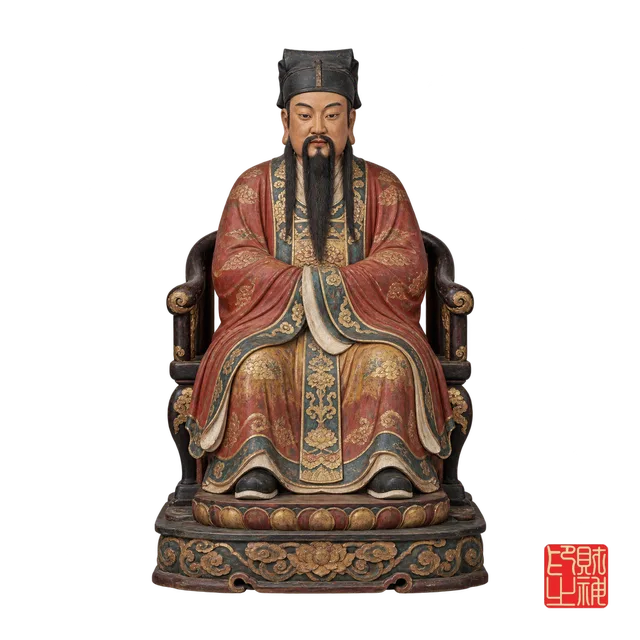
Bao Sheng Da Di was Wu Tao (吳夲, 979–1036), a physician of Baijiao in Tong’an, Fujian, known reverently as 大道公 or 吳真人. A brilliant doctor, he treated the rich and the poor alike without charge, and legend credits him with miraculous cures — even dotting a dragon’s eyes (點龍睛) and healing a tiger’s throat (醫虎喉). After he ascended in 1036, he was deified as the God of Medicine. His ancestral temple is 白礁慈濟宮, and more than 2,000 temples honor him across Fujian, Taiwan, Hong Kong, Macau and Southeast Asia.
三月十五 · 保生大帝聖誕 — devotees pray for health, healing and a safe year (the windy day is fondly called 大道公風).
An interactive devotional altar for guidance & reflection — not medical advice. For health concerns, see a doctor.
Feast days
保生大帝聖誕 — pray for health, healing and a safe year; the windy day is fondly called 大道公風.
唸誦
保生大帝聖號
The Holy Name of the Great Emperor Who Preserves Life
南無慈濟保生大帝
ná mó cí jì bǎo shēng dà dì
Homage to the Compassionate Deliverer, Great Emperor Preserving Life
- 遍數 · How many
- Three times, naming the patient after
- 何時 · When
- Before treatment, and again when it is over
供品 · What to bring
- Herbs, or plain rice
- Water — clean, and left rather than poured away
- The patient’s name written down if they cannot come
供品禁忌 · What not to bring
What follows is widely observed and is not doctrine. These are folk conventions: they differ between Taiwan, Hokkien Singapore and Guangdong, and they have changed within living memory. They are worth knowing because the people around you at the altar will know them.
-
芭樂 · 番茄 · Guava and tomato
Both are 多籽 — many-seeded — and the seeds pass through the gut intact. Fruit that comes out the other side is treated as 不潔, unclean, to set before a god. A second reading is a pun: 多籽 for 多心, "many hearts", meaning a divided or insincere one.
-
釋迦 · Sugar apple (custard apple)
It carries the Buddha's own name — 釋迦 is 釋迦牟尼 — and its knobbed surface is read as his topknot. Offering something named and shaped after him is taken as disrespect rather than devotion.
-
香蕉、李、梨(同時) · Banana, plum and pear together
Spoken in Taiwanese, 蕉—李—梨 sounds like 「招你來」 — inviting you to come. That is what you say to 好兄弟, the wandering spirits, and not to a god. Any one of the three alone is unremarkable; it is the set of three that makes the phrase. Avoided most strictly in 七月.
-
榴槤 · Durian
The smell. Strongly odorous offerings are treated as 不潔 in the same category as anything spoiled — the objection is to what is set before the god, not to the fruit itself.
-
蓮霧 · Wax apple
Hollow at the centre, read as 無心 — heartless, or offering without a heart in it. The dimpled base is separately read as 漏財, wealth leaking away, which is why it is avoided here in particular.
-
牛肉 · Beef
The ox is 太上老君's mount. Daoist practice forbids eating it and forbids offering it, and the prohibition is about the animal's station rather than about meat in general.
李豐楙, Academia Sinica's first Daoist academician and emeritus chair professor at 政治大學 says that the taboos in ritual are 各家說法 — one school's telling. Homophones are one factor among several, the rules differ by region, and they have shifted over time. Fruit specialists interviewed alongside him rejected several outright.
We think both halves are true and a visitor deserves both. Follow them at a temple where they are observed — the people beside you will know them, and that is reason enough. Do not treat a guava as an offence against heaven.
忌 · Never bring
- Bringing this instead of a doctor. He was one
稟告
How to introduce yourself, and then ask
Before you ask for anything, you say who you are. Every account of this agrees on the same reason, and it is not politeness: a hall is a public office and the god is being told which of us is speaking.
-
1
弟子〔姓名〕/信女〔姓名〕
Your name
弟子 if you are a man, 信女 if you are a woman. Your name in full, as it is written.
-
2
現住〔住址〕
Where you live
Where you actually live now, not where you are registered. Said aloud or in your head — nobody else needs to hear it.
-
3
生於〔年〕年〔月〕月〔日〕日〔時辰〕
When you were born
Year, month, day and hour if you know it. Some add the 生肖. This is the part that identifies you and the part people skip.
-
4
今備〔供品/金紙〕,敬奉保生大帝
What you have brought, and to whom
What is actually on the table. If you have brought nothing, say so — coming empty-handed and saying so is better than naming something that is not there.
-
5
祈求保生大帝保佑〔所求〕
And then the asking
Plainly, and one thing at a time. What is appropriate to ask differs by hall — this page says what each one is for.
-
6
弟子〔姓名〕,叩謝
Thank, and say who is thanking
Named again at the end. You introduced yourself; you close the same way.
Say all of it again at each altar you stop at, not once on the way in. You are addressing somebody different each time, and this is the part most often left out.
This is the common Taiwanese and Singaporean form as recorded in the sources below — a shape, not a script, and not one temple's rule. Households differ on how much detail to give: some add parents' names or where the ancestral tablets are kept. If your family does it differently, your family is right and this page is a guide for somebody who has never been told.
Where your offering goes
Half of every 香油錢 left here is set aside and sent on, once a month, to a working temple.
The first remittance has not gone out yet. When it does, the temple, the date and the transfer reference will appear here.
下一步
觀世音菩薩
Healing is asked for twice in this temple: here, in the doctor’s own hall, and at 觀音’s, where it is asked for as mercy rather than as medicine. Nothing is required of you there and nothing is sold.